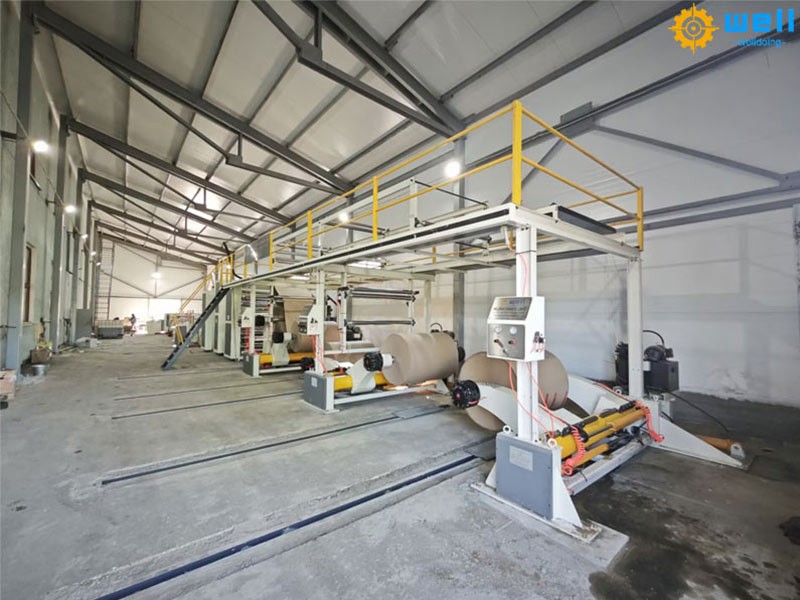
If you run a corrugated box plant, the machine that decides your daily output is the one that prints, slots and die cuts in a single pass. A chain feed flexo printing slotting die cutting machine is the most cost-efficient way to bring that process in-house, and it is still the workhorse of thousands of packaging factories worldwide. This guide explains how the machine works, what to look for when you buy, and how to run it so that every sheet leaves the stack square, clean and ready to fold.
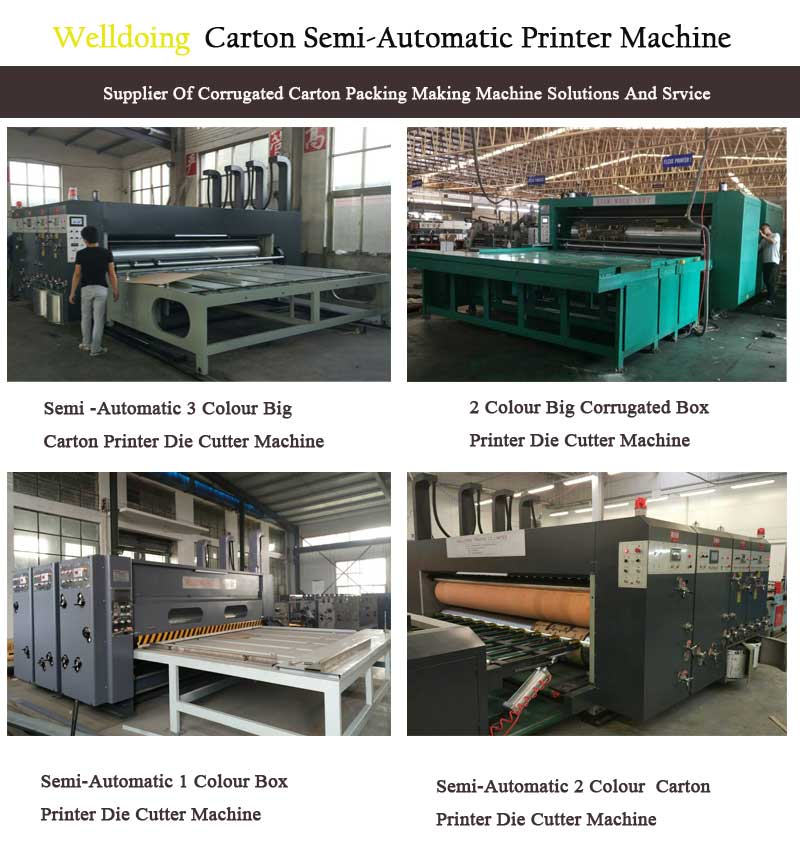
Inline or lead-edge feed machines are faster, but they cost more to buy, more to maintain and more to set up. A semi-automatic carton printer die cutter slotter machine uses a simple lug chain to push each board through the printing, slotting and die cutting stations. Fewer servos, fewer sensors, fewer things to break. For plants producing shipping cartons, fruit trays, mailer boxes and industrial packaging at 60 to 150 pieces per minute, that simple design delivers the lowest cost per box and the shortest payback.
The real advantage is consolidation: instead of three operations and three crews, one machine and one crew turn a stack of sheets into finished, creased, slotted blanks. Handling disappears, WIP drops, and lead times shrink from days to hours.
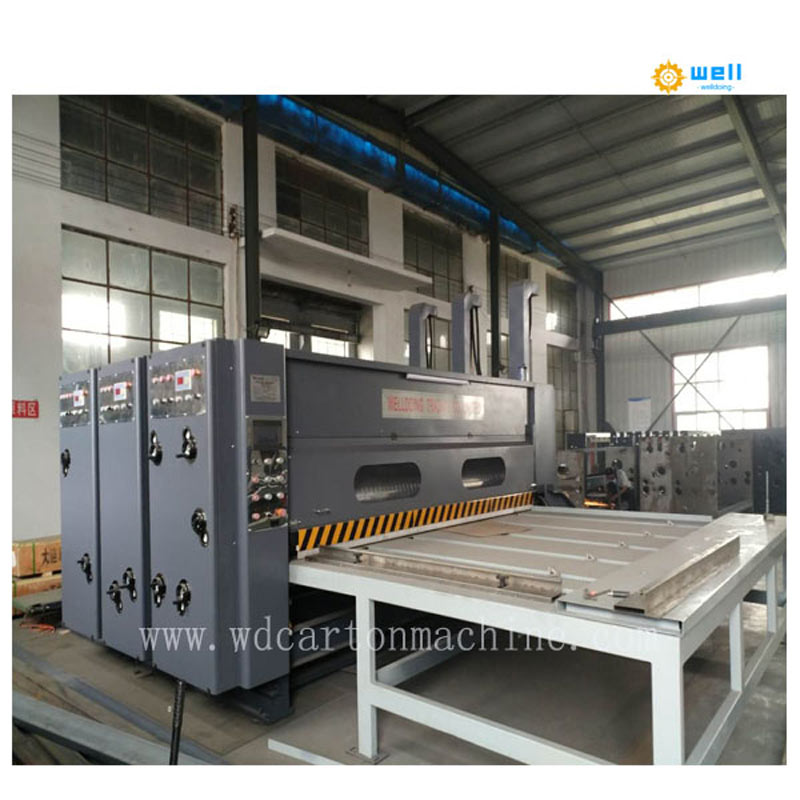
Sheets are stacked in the feed section and pushed forward by lugs on a pair of chains. The chain runs at constant pitch, so the sheet arrives at the printing unit at a fixed position. Register is held by the lug pushing against the trailing edge, not by friction rollers, which is why a chain feed machine handles warped, recycled or heavy-flute board more forgivingly than vacuum feed systems.
From the feed, the sheet passes through one to four printing units, each with an anilox roller, doctor blade, plate cylinder and impression cylinder. After the last colour it moves into the slotting section, where creasing wheels and slotting knives cut the flap profile, then into the die cutting station for hand holes, ventilation holes, tear strips or custom shapes, and finally to the stacker.
Because the chain sets the timing for every downstream station, registration, once dialled in, holds all shift.
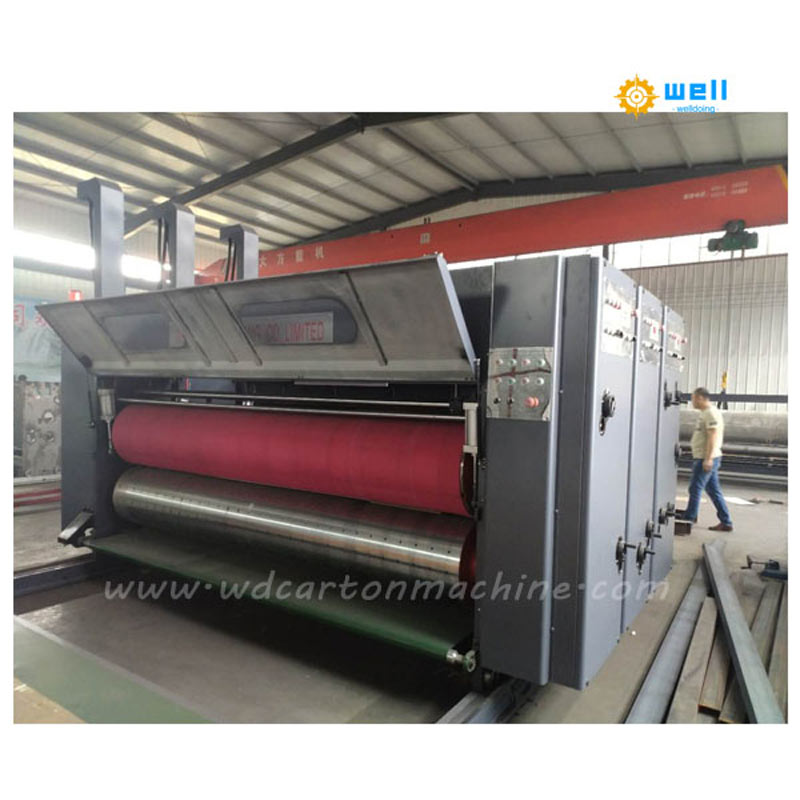
A standard Chain Feed Flexo Printer die cutter slotter machine for medium cartons is built around these parameters:
Maximum sheet size: 1200 x 2400 mm to 1600 x 2800 mm
Working speed: 60 to 150 sheets per minute
Printing colours: 1 to 4, with 4-colour as the common choice
Printing precision: plus or minus 0.5 mm
Slotting precision: plus or minus 1.0 mm
Suitable board: 3-ply and 5-ply corrugated, 2 to 10 mm thickness
Main drive: AC frequency motor with PLC and touch-screen control
Machine sizes are quoted by maximum sheet. If most orders ship in boxes under 800 mm, a smaller frame reaches higher speed on short sheets and uses less floor space.
Print quality on corrugated board depends far more on the anilox and doctor blade than on colour count. A ceramic anilox with consistent cell count and a chambered doctor blade gives even ink transfer at speed, keeping solids from going blotchy and small type from filling in.
Look for these details in the printing units:
Plate cylinders with quick-lock plate mounting and lateral and circumferential register adjustment while running
Independent phase adjustment per colour, so one unit can be corrected without touching the others
Automatic ink circulation with a wash-up cycle that does not require the operator to strip the unit
A rubber or ceramic anilox matched to your typical coverage - 60 percent solid work needs a different anilox than 90 percent line work
Ask the supplier for print samples on the flute you actually run. A machine that prints well on 5-ply K=A board may show washboard on thin 3-ply.
The slotting section carries four creasing and slotting heads on a common shaft, each adjustable in position. The creasing wheels must be set so that the score does not crack the liner on heavy board, while the slotting knives need sharp edges and correct clearance to cut cleanly without tearing.
The die cutting station uses a rotary die cylinder with a wooden or magnetic die. Rotary die cutting is the practical choice here: it runs in line, needs no operator and handles hand holes, windows and ventilation patterns at full speed. Anvil condition matters - a worn cover gives ragged edges and crushed flutes, and replacing it on schedule is cheaper than sorting bad boxes downstream.
Plants use these machines for a wide basket of products: export shipping cartons, e-commerce mailers, fruit and vegetable trays, appliance cartons, furniture packaging, shoe boxes, toy packaging and industrial part dividers. Because slotting and die cutting are combined, the machine handles everything from a plain RSC to a complex die-cut mailer with a locking tab.
If your order book mixes short runs with repeat contracts, changeover speed is the value: a trained crew can change a four-colour job - plates, ink and die - in 30 to 60 minutes.
Compare the total cost, not the price tag. A Chain feeding cardboard printing die cutting machine typically consumes less power than a servo-driven inline machine, needs fewer spare parts and can be maintained by your own fitters with basic training. Labour is the biggest saving: one operator and one helper can run the line, against three or four people across separate printer, slotter and die cutter stations.
Board waste is the second saving: single-pass handling means fewer damaged sheets between machines, and a well-set creaser reduces flap cracking on the folding line. Most plants see payback within 12 to 24 months on two shifts.
Ask any supplier these questions and require written answers:
What is the maximum and minimum sheet size, and at what speed does it run at that size?
Which anilox and doctor blade type is standard, and can it be swapped for my coverage?
Is register adjustable while running, per colour?
What is the lead time for wear parts - anilox, doctor blade, anvil cover, slotting knives?
Which PLC and touch-screen brand is used, and is remote support available?
What is the actual power consumption and compressed air requirement?
How is the machine shipped, and who supervises installation and commissioning?
How many days of on-site training are included, and in what language?
What warranty applies, and which parts are excluded?
Can I see the machine running on my board before shipment?
A supplier who cannot answer question ten clearly is a supplier to avoid.
Foundation and level installation matter more than most buyers expect: a machine out of level shows register drift and uneven slot depth within weeks. Require anchor bolt drawings and a laser level check before commissioning.
Train your crew on three routines: daily anilox and doctor blade wash-up, weekly chain tension and lubrication check, monthly inspection of creasing wheels and anvil cover wear. Done properly, these prevent most quality complaints.
Keep on the shelf: one spare anilox, two doctor blades, one anvil cover, a set of slotting knives, creasing wheels, chain links and a joint, plus the PLC battery. The kit costs little against a stopped line and lets your fitters handle most stoppages without an overseas shipment.
Is a chain feed machine slower than a lead-edge machine?Yes - typically 60 to 150 sheets per minute against 200 or more. For most shipping-carton work the bottleneck is die cutting and changeover, not feed speed, so the practical gap is smaller than the numbers suggest.
Can it print four colours and die cut in one pass?Yes. A four-colour chain feed flexo printing slotting die cutting machine prints, creases, slots and rotary die cuts in a single pass, then stacks the finished blanks.
What board thickness can it handle?Most models run 3-ply and 5-ply board from 2 mm to 10 mm, with some heavy-duty frames taking 7-ply on request.
How long is delivery and installation?Common configurations ship in 45 to 90 days; installation and commissioning take 7 to 15 days depending on the number of colours and site readiness.
Whether you are replacing an ageing printer-slotter or adding your first in-house line, the right chain feed flexo printing slotting die cutting machine cuts cost per box and shortens lead times. Send your box sizes, board grades, colour count and monthly volume, and we will recommend the frame and configuration that fits your order book - with a running video on your own board before you commit.
Email:cartonmachine.tomwang@aliyun.com
Phone/Wechat/Whatsapp:+86 133 0307 8975