Ink wastewater is one of the most common industrial wastewater produced by printing, packaging, textile printing and dyeing industries. Featuring high COD, high chromaticity, complex organic components and difficult biodegradation, untreated ink wastewater discharge will cause serious water pollution and trigger strict environmental penalties. For small and medium-sized manufacturing enterprises, selecting a suitable Ink waste water treatment machine is the core key to realize compliant discharge, reduce operating costs and achieve sustainable production. This article will share professional and practical selection guides to help global buyers pick the most cost-effective ink waste water treatment machine according to their actual production conditions.
The first and most fundamental step to customize a suitable ink waste water treatment machine is to clarify the characteristics of your own ink wastewater. Different production processes produce completely different wastewater indicators, which directly determine the equipment configuration and treatment process. First, confirm the wastewater type: water-based ink wastewater, oil-based ink wastewater or mixed ink wastewater. Water-based ink wastewater has high chromaticity and a large number of suspended solids, while oil-based ink wastewater contains more grease and refractory organic matter, putting forward higher requirements for the oxidation and filtration capacity of the ink waste water treatment machine.
Meanwhile, enterprises need to count the daily wastewater output and detect core water quality indicators including COD concentration, pH value, SS content and chromaticity. Factories with small water output (1-10 tons per day) are suitable for integrated small-sized ink waste water treatment machine, while large printing and packaging plants with daily output of more than 50 tons need to choose industrial-grade large-flow equipment to ensure stable treatment efficiency. Clarifying wastewater characteristics can effectively avoid the problem of insufficient treatment capacity or excess equipment function, helping buyers save unnecessary procurement costs.
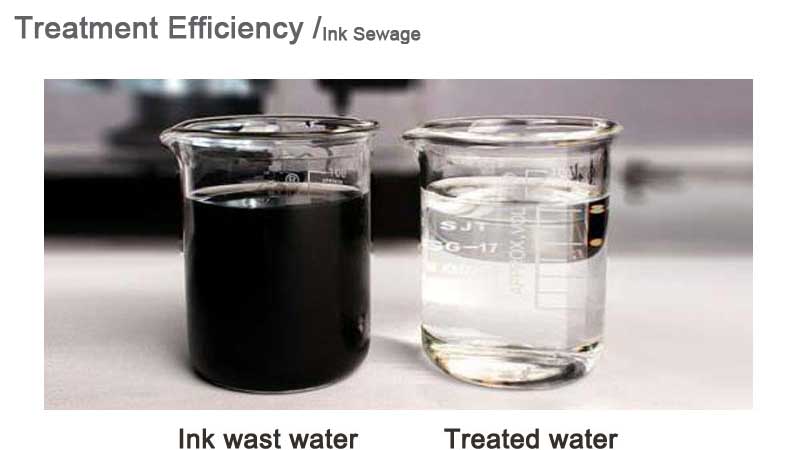
Compliance with local environmental discharge standards is the primary principle for selecting an ink waste water treatment machine. Environmental protection regulations vary greatly in different countries and regions. The EU, Southeast Asia, the Middle East and other regions have independent industrial wastewater discharge standards for printing industries. A high-quality waste water treatment machine must support parameter adjustment to adapt to different standard requirements, including direct discharge standards, indirect discharge standards and factory water reuse standards. Formal ink waste water treatment machine can stably reduce wastewater COD to below 50mg/L, chromaticity to below 50 times and SS to below 10mg/L, meeting the international first-class discharge standard. For enterprises with water reuse demand, the optimized ink waste water treatment machine can realize wastewater recycling after treatment, greatly reducing factory water consumption and long-term production costs. It is worth noting that non-compliant equipment will lead to production suspension and huge fines, so standard adaptability must be prioritized in selection.
Operating cost and equipment practicability are important factors that global buyers focus on when purchasing ink waste water treatment machine. Many buyers only pay attention to the initial procurement price and ignore the later operation and maintenance costs, resulting in low return on investment. Excellent ink waste water treatment machine adopts optimized physical and chemical treatment process, with low reagent consumption, low power consumption and small sludge output. The unit water treatment cost is controlled within a reasonable range, which is far more economical than traditional complex treatment equipment.
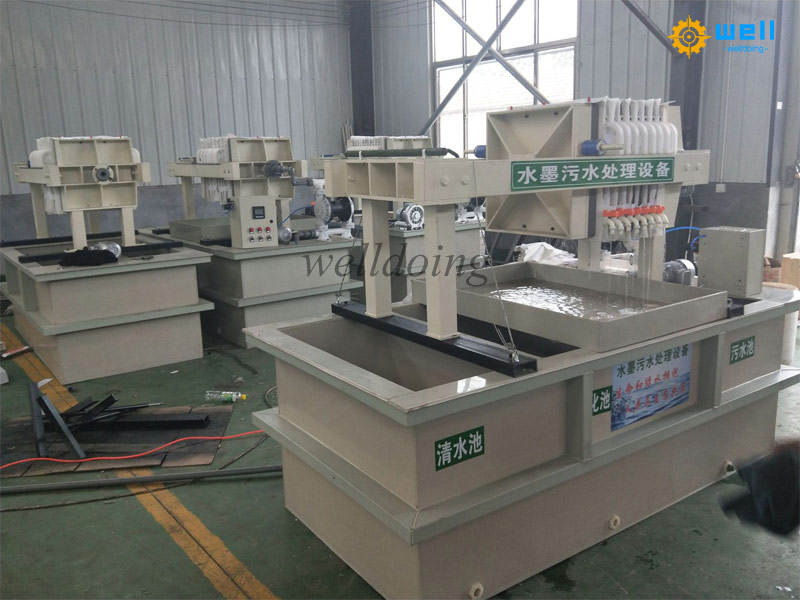
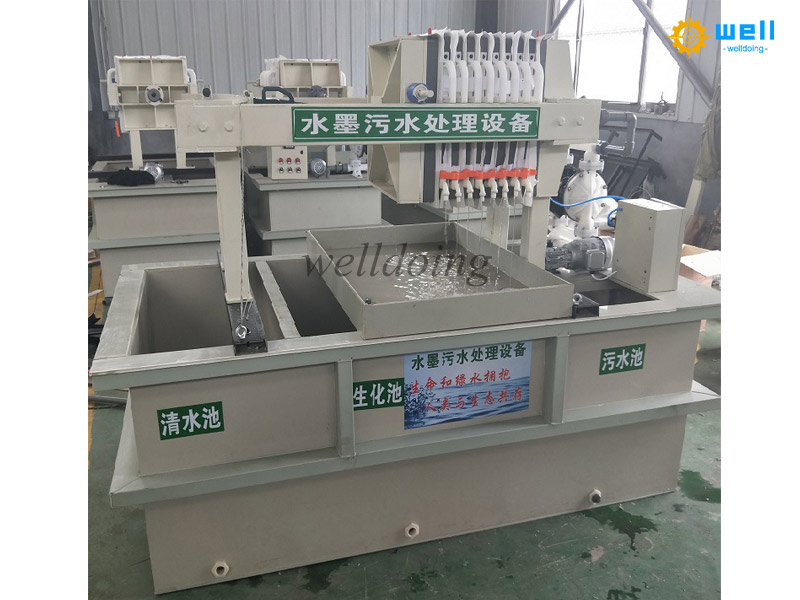
In addition, considering the factory space layout of most printing enterprises, the integrated skid-mounted ink waste water treatment machine has become the mainstream choice in the market. This equipment integrates sedimentation, oxidation, filtration and pH adjustment modules, covering a small area and requiring no complex civil engineering construction. At the same time, the fully automatic intelligent control system realizes one-key operation, real-time monitoring of water quality and equipment operating status, reducing the dependence on professional operators and solving the problem of difficult operation of traditional wastewater treatment equipment.
Supplier strength and after-sales service are indispensable guarantees for the long-term stable operation of ink waste water treatment machine. When selecting equipment, buyers should prioritize professional environmental protection manufacturers with rich industry experience and complete qualification certificates. Reliable suppliers can provide personalized equipment configuration solutions according to customers' wastewater conditions, rather than selling standardized equipment blindly.
Moreover, perfect after-sales service is crucial. Excellent ink waste water treatment machine suppliers provide global remote guidance, on-site installation and commissioning, operator training and long-term spare parts supply services. Timely technical support can avoid equipment shutdown caused by failure, ensure continuous and stable wastewater treatment of the factory, and eliminate production risks.
In conclusion, the correct selection of waste water treatment machine needs to comprehensively consider wastewater characteristics, local environmental protection standards, operating costs, equipment practicability and supplier strength. A targeted selected ink waste water treatment machine can not only help enterprises meet environmental compliance requirements, but also effectively control production costs and enhance market competitiveness. For global printing and packaging enterprises, choosing a high-quality, low-consumption and fully automatic ink waste water treatment machine is an important measure for long-term green development.